Why Copying Bargue Plates Is Essential to Mastering Classical Drawing?
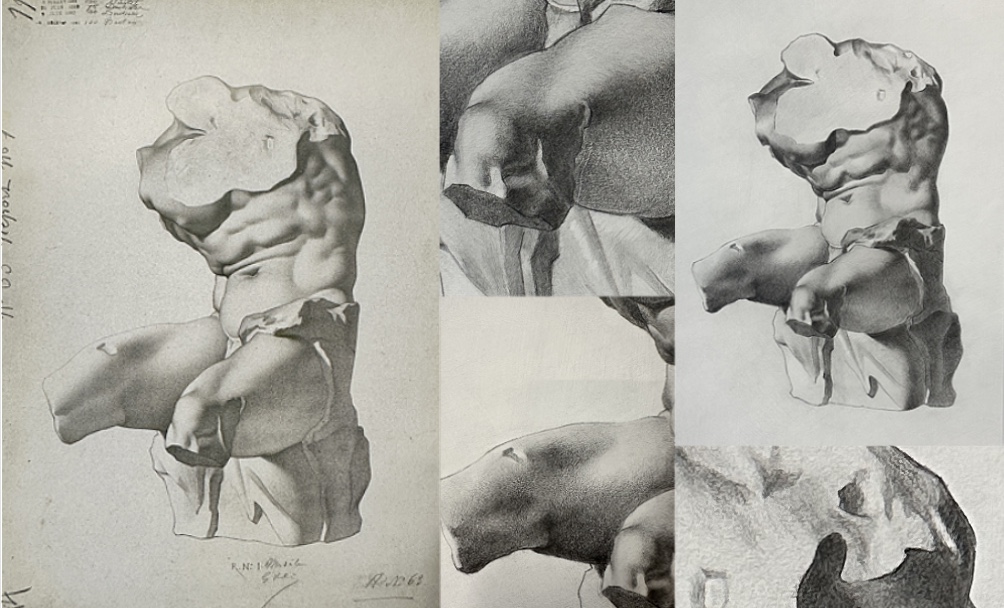
In a college drawing class I took recently, we were assigned a classic exercise: copying Charles Bargue plates. As someone already familiar with classical drawing methods, I didn’t expect it to be eye-opening or transformative—but I did find it surprisingly enjoyable to copy the plates using pencils.
There was something satisfying about slowing down, carefully observing every angle and shadow, and just getting lost in the precision of the process. It was less about learning something new, and more about reconnecting with the fundamentals in a focused, almost meditative way.
What Are Bargue Plates?
The Bargue Drawing Course, developed in the 19th century by Charles Bargue and Jean-Léon Gérôme, consists of a series of lithographic plates designed to teach students the fundamentals of academic drawing. These plates break down complex classical forms into manageable steps, making them ideal for developing accuracy and control.
Used in ateliers and academic art schools for generations, Bargue plates are still a go-to method for strengthening observational skills and laying a solid foundation for more advanced work.
Why Copying Bargue Plates Still Matters
Even if you’re already classically trained, there’s value in returning to this kind of practice. Here’s why:
- It Sharpens Observation
Revisiting Bargue plates reminds you to truly look again—to observe relationships, measure carefully, and not rely on visual shortcuts. - It Reinforces Precision and Control
The discipline required to accurately copy a Bargue plate helps fine-tune your control over line and proportion, no matter your skill level. - It’s Meditative and Enjoyable
For many artists, including myself, the act of slowly and methodically reproducing a plate becomes a calming, focused experience. - It Grounds You in the Essentials
Even advanced artists benefit from revisiting the basics. Bargue plates offer a structured way to refresh your technical foundation. - It Builds Visual Memory
Copying idealized forms helps train your eye to recognize structure and balance, which improves not just realism but imaginative drawing too.
Final Thoughts
Copying Bargue plates wasn’t a breakthrough moment for me—but it was a great reminder of the importance of returning to classical fundamentals. Whether you’re just starting out or years into your drawing journey like me, spending time with these plates is always a worthwhile investment.
So print one out, sharpen your pencil, and enjoy the process. Sometimes, revisiting the basics is the best way to recharge your artistic practice. The pictures above shows my except for the Bargue drawing on the left.