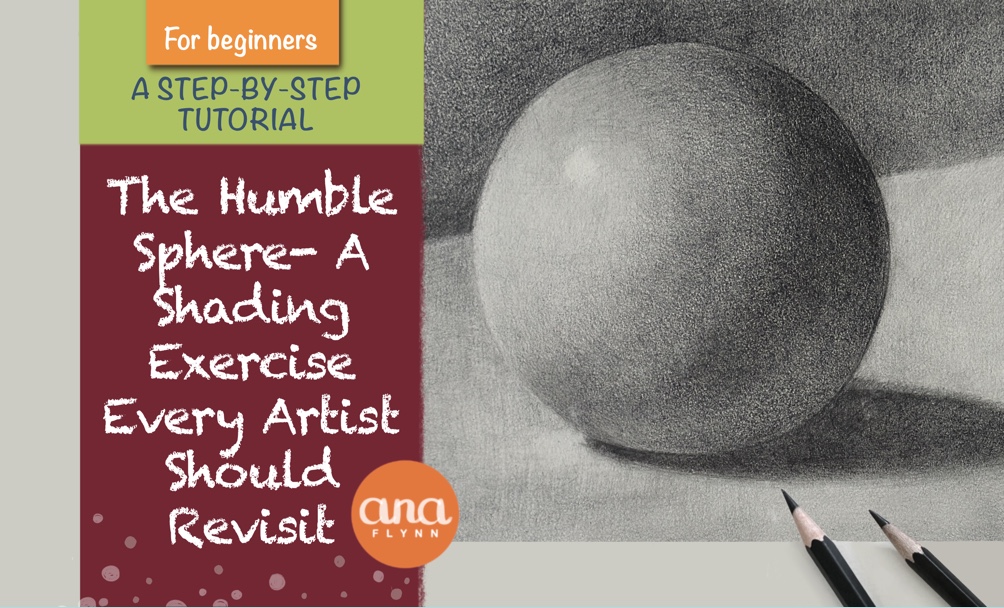
Every now and then, I go back to one of the most basic exercises in drawing: shading a simple sphere. It’s something I first learned early on, and even now, it helps me stay sharp (along with my pencils!). It might look easy, but it takes real patience—and a lot of pencil sharpening—to get it just right.
🎨 Materials I Used:
Want to try this yourself? Here’s a list of the exact pencils, paper, and tools I use for this exercise.
Check out my drawing supply list here → (affiliate link — I may earn a small commission at no extra cost to you!)
1. Start with a Light Circle
Lightly draw a circle using an HB pencil. Keep your lines clean and soft—you’ll erase some later. You can trace around a circular object if freehand circles aren’t your thing yet.
2. Pick Your Light Source
Decide where the light is coming from (top left is a common choice for beginners). This will affect where you place shadows and highlights.
3. Add the Core Shadow
Using a slightly softer pencil (like 2B), shade the side opposite the light source. This is your core shadow—it’s the darkest part of the sphere, but still soft and round.
4. Blend the Midtones
Now shade the midtone areas between the light and dark, using light, even strokes. This is where patience comes in—take your time to blend the values smoothly so there are no harsh lines.
5. Leave the Highlights
Don’t shade the brightest spot where the light hits the sphere. This highlight gives your drawing that pop of realism. You can even use an eraser to gently lighten it later.
6. Add the Cast Shadow
Below and slightly to the opposite side of the light, draw a cast shadow on the ground. It should be darkest near the base of the sphere and fade outward.
7. Refine and Blend
Use a blending stump or tissue (not your finger—it adds oil!) to soften the transitions. Sharpen your pencil often to keep control over the shading. You can go back in with a darker pencil (4B or 6B) to deepen shadows if needed.
Final Thoughts
Drawing a sphere is more than just an academic exercise—it teaches you how light behaves, how to control your values, and how to build believable form. It’s quiet, focused work, and honestly kind of therapeutic. So grab your pencils, take your time, and don’t forget to keep that sharpener handy.
Your future portraits and still life projects will thank you.